
Tutorials
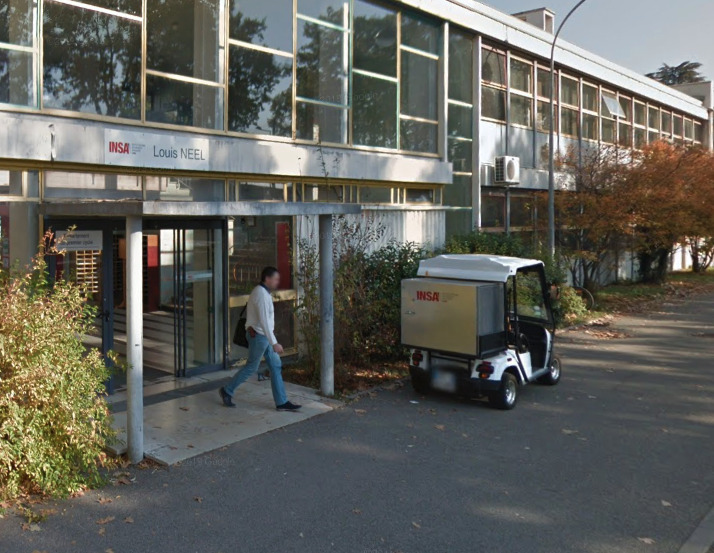
Louis Néel Building
07 Avenue Jean Capelle 69621 • Villeurbanne
All workshops and tutorials will take place in the Louis Néel Building, located directly opposite the Croix Luizet tram stop (Tram T1).
We thank the IAPR community for all submitted tutorial proposals. The list of selected tutorial are given below.
Tutorial Program Overview
| Friday August 21 ( Louis Néel Building ) | |
|---|---|
| 8:30-12:30 | 13:30-17:30 |
| Graph based Models for Video Data Analysis from Various Sensors (B3) | Advancing Comprehensive Reasoning in Multimodal Large Language Models (Amphi Seguin) |
| Reliable Industrial AI (B7+B8) | Robot Learning with Embodied Vision: From Perception to Action (Amphi Vannier) |
| An Introduction to the Formal Verification of Neural Networks (B5) | Counterfactual Explanations of AI Systems: Fundamentals, Methods, & User Studies for XAI (B3) |
| Agentic Document Intelligence: From Prototype to Production with Trustworthy AI Agents (Amphi Seguin) | |
Tutorial Detailed List
Resume:
In this tutorial, we aim to explore graph based methods for video data analysis captured by a wide variety of sensors like normal camera, egocentric camera, and moving camera. This tutorial will aim to combine graph based theory, practical methods, and a variety of applications pertaining to the analysis of video data generated from the above sensors. The graph based models will also be combined with deep learning architectures as deem necessary. We will further demonstrate the role of GNNs (deep learning on graphs) and graph signal processing in solving various problems in this connection. As a summary, the tutorial will help attendees to gain theoretical insights as well as make them aware of potential applicability of graph based models for processing different types of videos.
The associated homepage showcasing the tutorial is given available on this link:
https://sites.google.com/view/tutorial-icpr2026-gvs
Authors :
- Assoc. Prof. (HDR) Thierry Bouwmans, Laboratoire MIA, University of La Rochelle, France
- Assoc. Prof. Anastasia Zakharova, Laboratoire MIA, University of La Rochelle, France
- Dr. Meghna Kapoor, Laboratoire L3i, University of La Rochelle, France
- Asst. Prof. Abhimanyu Sahu, Motilal Nehru National Institute of Technology, India
- Prof. Ananda S. Chowdhury, Jadavpur University, India
Date: August 21, 2026, 08h30-12:30
Room: B3
Resume:
This tutorial will provide a comprehensive overview of reasoning capabilities in Multimodal Large Language Models (MLLMs), focusing on the transition from basic perception to complex inference. We will explore how multimodal reasoning differs from text-only reasoning, challenges specific to visual reasoning, and recent advances inspired by reasoning-focused LLMs. The tutorial aims to bridge the gap between theoretical foundations and practical implementations, offering attendees insights into both current capabilities and future research directions.
Authors :
- Yiwei Wang, University of California, Merced
- Yujun Cai, University of Queensland
- Junsong Yuan University at Buffalo, State University of New York
- Jun Liu, Lancaster University
Date: August 21, 2026, 13h30-17:30
Room: Amphi Seguin
Resume:
Recent advances in large language models (LLMs) and multimodal foundation models have enabled rapid progress in AI capabilities. However, when deployed in industrial and enterprise environments, these systems often fail to meet critical requirements such as:
- Flexibility, reliability and traceability
- Safety and compliance
- Cost and energy efficiency This tutorial introduces the emerging paradigm of Reliable Industrial AI, which integrates:
- Multimodal perception (vision, speech, language)
- Agentic LLM design (agent pipelines, orchestration, evaluation)
- From Chatbot to Coding Agent
We emphasize lessons learned from real-world deployments, highlighting the gap between research prototypes and production systems.
Authors :
- Liangliang Cao, Google Gemini (2024-2025), Apple Intelligence (2023-2024)
- Chang Wen Chen, The Hong Kong Polytechnic University
Date: August 21, 2026, 08h30-12:30
Room: B7+B8
Resume:
Traditional robotic systems are fundamentally limited by their reliance on hand-coded behaviors and modular pipelines that separate perception, planning, and control. While effective in controlled settings, these approaches fail to adapt to the complexity and uncertainty of unstructured real-world environments. The problem is particularly acute when vision serves as the primary interface between a robot and its surroundings. Robot learning, which integrates deep learning, reinforcement learning, and imitation learning, offers a transformative paradigm, enabling robots to acquire skills directly from data and close the loop from visual perception to physical action. This tutorial provides a comprehensive introduction to this rapidly evolving field, structured to bridge foundational concepts with advanced embodiment-specific applications. The tutorial is organized into five parts. We begin by establishing the core principles of robot learning, contrasting it with traditional methods, and covering essential kinematics, dynamics, and the spectrum of learning paradigms . The following three parts delve into the application of these paradigms across the primary robotic embodiments. For wheeled robots, we explore learning robust environment representations, multi-sensor perception fusion, and advanced decision-making frameworks for safe navigation. For legged robots, we discuss bio-inspired locomotion, hierarchical reinforcement learning for gait and terrain adaptation, and whole-body motion control. For robot arms, we examine various skill acquisition, from imitation learning and dexterous manipulation to the frontier of language-guided policies using large foundation models. The final part synthesizes cross-cutting open challenges, including generalization, sim-to-real transfer, safety, and the path toward generalist robotic agents. To enhance engagement and comprehension, the tutorial will incorporate comparative visualizations and rich video demonstrations from both simulation and real-world deployments. This halfday tutorial, led by experts in the field, is designed for a broad audience of researchers and practitioners in robotics, computer vision, and machine learning at ICPR 2026, offering a structured and holistic perspective on enabling embodied intelligence through learning.
Index Terms: Robot Learning, Wheeled Robots, Legged Robots, Robot Arms
Authors :
- Wei Zhang, School of Control Science and Engineering, Shandong University
- Cong Zhang, School of Control Science and Engineering, Shandong University
- Ran Song, School of Control Science and Engineering, Shandong University
- Paul L. Rosin, School of Computer Science and Informatics, Cardiff University
- Jiwen Lu, Department of Automation, Tsinghua University
Date: August 21, 2026, 13h30-17:30
Room: Amphi Vannier
Resume:
Ensuring a complex system is safe is a tedious task, and is often required by regulations and norms in critical industries like energy or transport. These application fields have very strong requirements regarding software safety, which involve proving that the system behaves as intended without any faulty behaviour. In this regard, testing approaches are insufficient as they only cover a finite set of cases. This need therefore led to the development of formal methods - a set of techniques that provides mathematical guarantees on the specified behaviours of a system.
As machine learning systems become increasingly integrated into our everyday lives, ensuring their safety becomes even more crucial. Formal verification can provide guarantees in a provable way, making it a good candidate to assess whether a neural network behaves as expected.
This tutorial will introduce the application of formal verification techniques to neural networks [15]. It will first explore the reasons why formal methods are a crucial step towards AI systems’ safety. Then, formal properties, such as robustness [5] and functional properties, will be introduced on an industrial example (ACAS-XU [13]). An emphasis on the different steps of the formal verification will be made: definition of the property on a system, translation to a specification language, and its effective verification. Verification techniques will be introduced, with a focus on abstract interpretation [14]. Then, state-of-the-art verification tools will be introduced, and the remaining part of the tutorial will be a practical session with one of them: PyRAT [12]. This tutorial will be concluded by open research questions regarding the efficient verification of properties and their formalisation
Authors :
- Julien Girard-Satabin Sasha Cuau Guilhem Ardouin
- Université Paris-Saclay, CEA, List, F-91120, Palaiseau, France
Date: August 21, 2026, 08h30-12:30
Room: B5
Resume:
This tutorial aims to build connections between the fields of pattern recognition, eXplainable AI (XAI), and psychology with a focus on counterfactual explanation strategies. Counterfactual XAI has become a major research topic in recent years, with over a thousand papers on the topic covering at least 150 distinct algorithms. Counterfactual explanations are widely regarded as readily understandable and psychologically compelling, providing actionable insights into model predictions, while simultaneously supporting regulatory constraints regarding transparency, such as those specified in the EU AI Act.
This tutorial will provide attendees with a comprehensive, practical guide to this popular XAI methodology. The program will feature interactive hands-on sessions on theoretical foundations, modeling approaches, and both computational and psychological evaluation methodologies to help attendees understand how to use counterfactuals for XAI.
It targets pattern recognition researchers, machine learning practitioners, PhD students, and advanced graduate students who have little to no background in XAI, and perhaps even less expe- rience of running user studies. As such, the tutorial aims to empower attendees in the XAI space to deepen their understanding of common issues and widen their research skills beyond their current modeling expertise. By the end of the session, attendees will have gained practical insights into how counterfactual explanations can enhance the transparency and accountability of AI systems, as well as a deeper understanding of (a) how to deploy these explanations effectively (using the DiCE toolbox [25]) and (b) practically conduct human-centered evaluations.
Authors :
- Dr. André Artelt, Postdoctoral Researcher, Bielefeld University, Germany
- Dr. Ulrike Kuhl, Postdoctoral Researcher, Bielefeld University, Germany
Date: August 21, 2026, 13h30-17:30
Room: B3
Resume:
Recent advances in multimodal foundation models and agentic AI are fundamentally reshaping Document Intelligence (DI), moving the field well beyond classical OCR pipelines and static extraction systems toward interactive, reasoning-driven workflows. In enterprise settings, documents remain one of the most critical and voluminous data modalities, yet the gap between research prototypes and production-grade systems remains large. Common failure modes include hallucination, weak evidence grounding, brittle orchestration, limited auditability, and insufficient human oversight.
This tutorial provides a practical and research-oriented introduction to Agentic Document Intelligence, with a dual focus on (i) how modern document AI systems are architected using multimodal foundation models and agentic reasoning, and (ii) how to make these systems trustworthy in real-world deployment. The tutorial is designed to be accessible to ICPR participants with backgrounds in document analysis, computer vision, or NLP, while also offering depth for researchers and engineers actively working in this space
Authors :
- Dr. Sanket Biswas Research Scientist / AI Lead, Ennova Research (Elevate) and Computer Vision Center (Ph.D. 2021-25)
- Dr. Andres Aravena Senior AI Engineer, Ennova Research (Elevate)
- Dr. Lukasz Borchmann, Senior Research Scientist, SnowFlake
Date: August 21, 2026, 08h30-12:30
Room: Amphi Seguin